
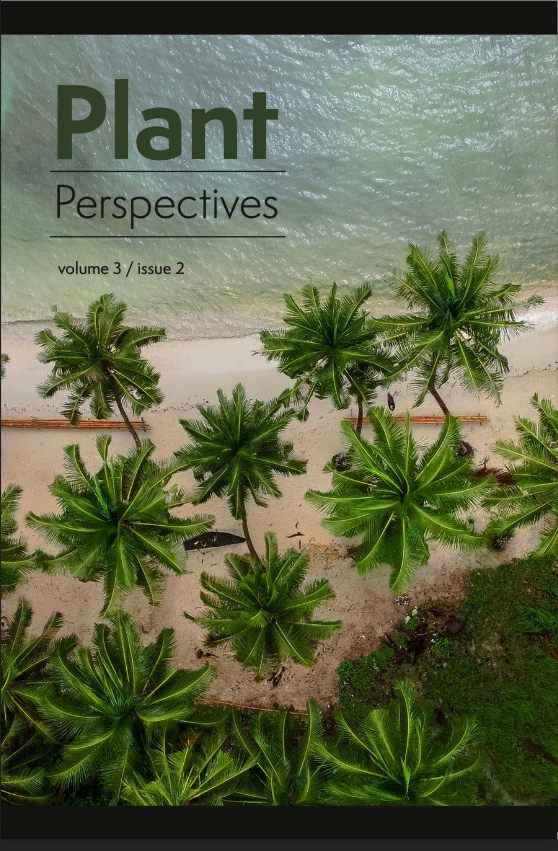
Published 2026-09-16
Keywords
- Bactris gasipaes,
- chontaduro,
- chonta marimba,
- Peach palm,
- Afro-descendant communities
- Music,
- Food Sovereignity,
- Racism,
- Chonta Palm,
- Pacific music,
- intangible cultural heritage ...More
How to Cite
Copyright (c) 2026 Vanessa Villegas Solórzano

This work is licensed under a Creative Commons Attribution 4.0 International License.
Abstract
The chonta palm – Bactris gasipaes – is a part of the identity of the Afro-descendant communities that inhabit the Pacific coastlands of Panama and Colombia through southern Ecuador. Its fruit, chontaduro, was fundamental for the food sovereignty of those who made this area their home after escaping slavery and continues to be a nutritional source with multiple uses in regional cuisines. The wood stock of the palm is used in the construction of chonta marimbas, emblematic instruments of traditional Afro folk music. Both in the elaboration of chonta marimbas and in the culinary uses of chontaduro there is a great knowledge and intangible cultural heritage of the Afro communities of these three countries, knowledge that binds them together and transcends international borders. The article addresses this heritage with the aim of contributing to the understanding of how biased race and class issues have affected both culinary culture and music making.
References
- Atinmo, T. and A. Bakre. 2003. ‘Palm fruit in traditional African food culture’. Asia Pacific Journal of Clinical Nutrition 12: 350–54.
- Clement, C.R. 1988. ‘Domestication of the pejibaye palm (Bactris gasipaes): past and present’. Advances in Economic Botany 6: 155–74.
- González-Jaramillo, N. et al. 2022. Peach palm (Bactris gasipaes Kunth.): Ancestral tropical staple with future potential. Plants 11 (22): 3134. https://doi.org/10.3390/plants11223134
- Illera, C.H. 2012. Nuestras cocinas desde el Nuevo Reino de Granada (siglo XVI) hasta la República (siglo XIX) a la luz de algunos cronistas y viajeros. Biblioteca de cocinas tradicionales de Colombia. Ministerio de Cultura de Colombia.
- Dirección de Patrimonio Ministerio de Cultura de Colombia. 2011. Convención y política de salvaguardia del Patrimonio Cultural Inmaterial. Ministerio de Cultura de Colombia.
- Patiño, V.M. 1963. Plantas Cultivadas y Animales Domésticos en América Equinoccial. I. Frutales. Cali, Colombia: Imprensa Departamental.
- Patiño, V.M. 1992. ‘An ethnobotanical sketch of the palm Bactris (Guilielma) gasipaes’. Principes 36 (3): 143–47.
- Patiño, V.M. 1989. ‘Comportamiento de plantas nativas colombianas bajo cultivo: situación actual del cultivo del chontaduro’. Revista de la Academia Colombiana de Ciencias 17 (65) 259–64.
- Patiño Ossa, G. 2012. Fogón de negros. Cocina y cultura de una región latinoamericana. Biblioteca de cocinas tradicionales de Colombia. Ministerio de Cultura de Colombia.
- Quiceno Toro, N. 2016. Vivir Sabroso: luchas y movimientos afroatrateños, en Bojayá, Chocó, Colombia . Bogotá, Colombia: Universidad del Rosario.
- Sosnowska, J. and M. Kujawska. 2014. All useful plants have not only identities, but stories: The mythical origins of the peach palm (Bactris gasipaes Kunth) according to the Peruvian Asháninka’. Trames: A Journal of the Humanities and Social Sciences 18 (2). https://doi.org/10.3176/tr.2014.2.05